
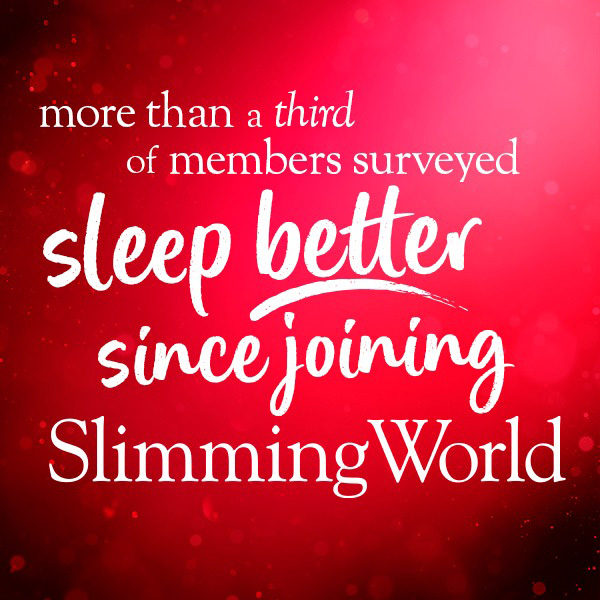

Have you ever noticed that when you don’t sleep well, you seem to feel hungry all the time? And the things you reach for might not be the healthy options you’d planned to eat? You’re not alone. Our survey of more than 3,100 Slimming World members* found that:
Three out of four Slimming World members say that their food choices are affected by poor sleep – with crisps, chocolate and sweets being the most likely go-to snacks when tired.
The Slimming World sleep study also showed that:
- more than a third of slimmers sleep better since joining Slimming World
- the more weight members lose, the more likely they are to report improvements in sleep
- half of slimmers who’ve lost 15% or more of their body weight say their sleep has improved

Breaking a negative sleep cycle
At Slimming World, we understand how sleep can affect weight, and vice versa. It can become a vicious cycle – we reach for the high Swip foods because we’re tired, our weight goes up and we find it even harder to sleep.
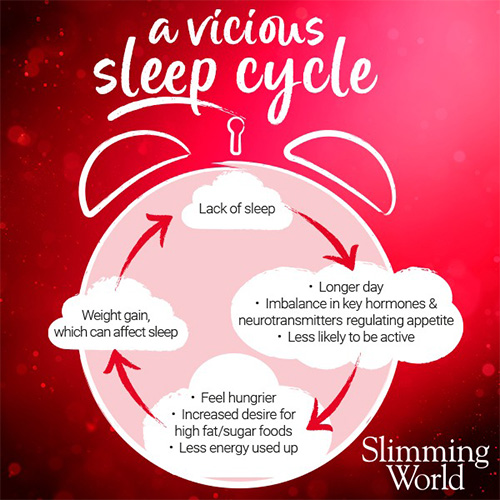
We can help you to reverse this cycle, improving the quality of your sleep through healthy lifestyle changes. This can help to prevent those sleep-deprived slip ups that can sabotage our weight loss success.
You can create a positive sleep cycle through:
- Food Optimising – our eating plan makes it easy to choose healthier options, even when you’re tired
- Support and strategies – we’ll help you to identify your danger areas around poor sleep, and equip you with ways to plan and protect your weight loss
- Increased activity – research suggests that people sleep significantly better when they lead an active lifestyle. Our active lifestyle programme will help you to move more at a pace that you’re comfortable with
This can all lead to better sleep, bigger weight losses and a brilliant wellbeing boost!
The benefits of improved sleep
More than a third of the members we surveyed said they’d been sleeping better since joining Slimming World, with many reporting that they:
- no longer go to bed feeling too full
- snore less
- experience less discomfort/pain
- make fewer night-time loo trips
- are less likely to lie awake worrying or feeling depressed
Sleeping better means that we have more energy during the day, feel more motivated to plan and prep healthy meals and are more likely to stick to activity plans!

Member sleep stories
“Every night, I thought I might not wake up the next day”
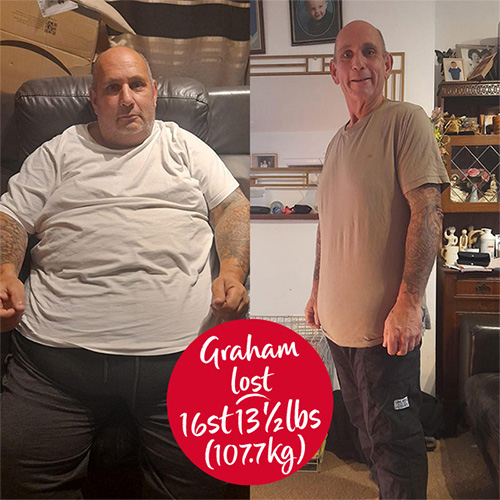
Graham Baalham has lost nearly 17st in less than two years with Slimming World, transforming his health completely;
“I’m 55 now, and I can honestly say that if I hadn’t joined Slimming World, I probably wouldn’t have lived to see 60. At nearly 29st, my weight was causing me a lot of health problems. Sleep was the worst part. It was terrifying. I’d wake up six or seven times a night not breathing, gasping for air. I’d have to stick my head out of the window just to breathe.
Food Optimising completely changed my mindset. I realised that losing weight isn’t about burning calories, it’s about what you eat – and how satisfying it is. I stay to group every week because you learn so much about food, and the weight loss support makes all the difference.
Nowadays, I feel like a 20-year-old! I walk up to 10 miles a day with my dog, whereas before, I was lucky if I managed one mile. I sleep through the night – no more gasping for air, no more sitting upright in the dark, terrified. I wake up feeling rested.”
“Struggling to breathe at night was my weight loss wake-up call”
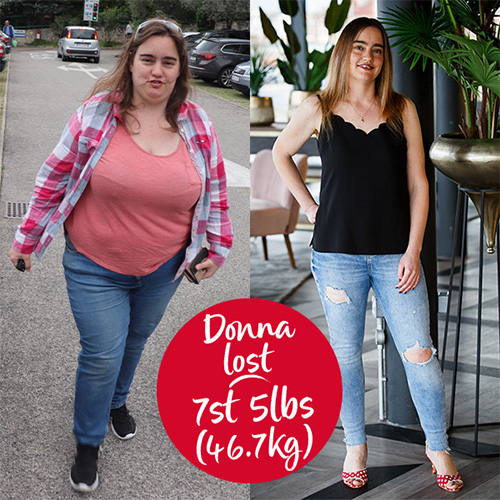
“At 17st 6lbs, my sleep apnoea was out of control. I’d wake bolt upright with a sharp intake of breath throughout the night. I felt constantly tired and I didn’t have the energy to cook or do any exercise, which meant I found it difficult to lose weight.
One morning I woke up and thought: ‘It doesnʼt have to be like this any more’. A friend at work had recommended her local Slimming World group, so I thought I’d give it a go. That decision changed my life and I went on to lose more than 7st!”
Tips to help you get a good night’s sleep
Although we know that there’s not always a quick fix for sleep issues, these tried-and-tested tactics could help:
🍎 Avoid eating large meals close to bedtime. If you fancy an evening snack, reach for something that’s fibre-rich and low in fat and sugar, as studies suggest that eating foods lower in fibre and higher in fat and sugar can negatively affect sleep quality. Examples could include:
- fat-free natural Greek yogurt and sliced banana
- carrot sticks and Slimming World hummus
- plain popcorn
- rice cakes
- sliced apple and 25g reduced-fat nut butter (made with 100% nuts)
🍷 Cut down on alcohol. While it can initially cause drowsiness, which might help you to drop off, it can also lead to a restless night, early waking and a worse sleep overall.
📱 Ban screens from the bedroom. The glare from our mobile phones, tablets and TVs delays the release of melatonin that normally helps you drop off to sleep.
🚶Enjoy a brisk walk or light stretches in the evening. Research shows gentle and moderate exercise can help you sleep better. Try to plan more strenuous activity for earlier in the day.
🛁 Build a relaxing routine. Stress and worry can keep us up at night. So try to do something soothing before bed, like having a warm bath, doing some stretching, reading a good book or having a hot, milky drink.
More for members: You’ll find more tips for a better night’s sleep, plus strategies to help protect your weight loss on tired days, in the Snooze more, lose more feature on our exclusive member website
*Holloway, L., Morris, L., Dowse, E., Bennett, S.E., Lavin, J. (2016) Snooze you lose? Views of the relationship between sleep and weight-related behaviours in people aiming to lose weight.