


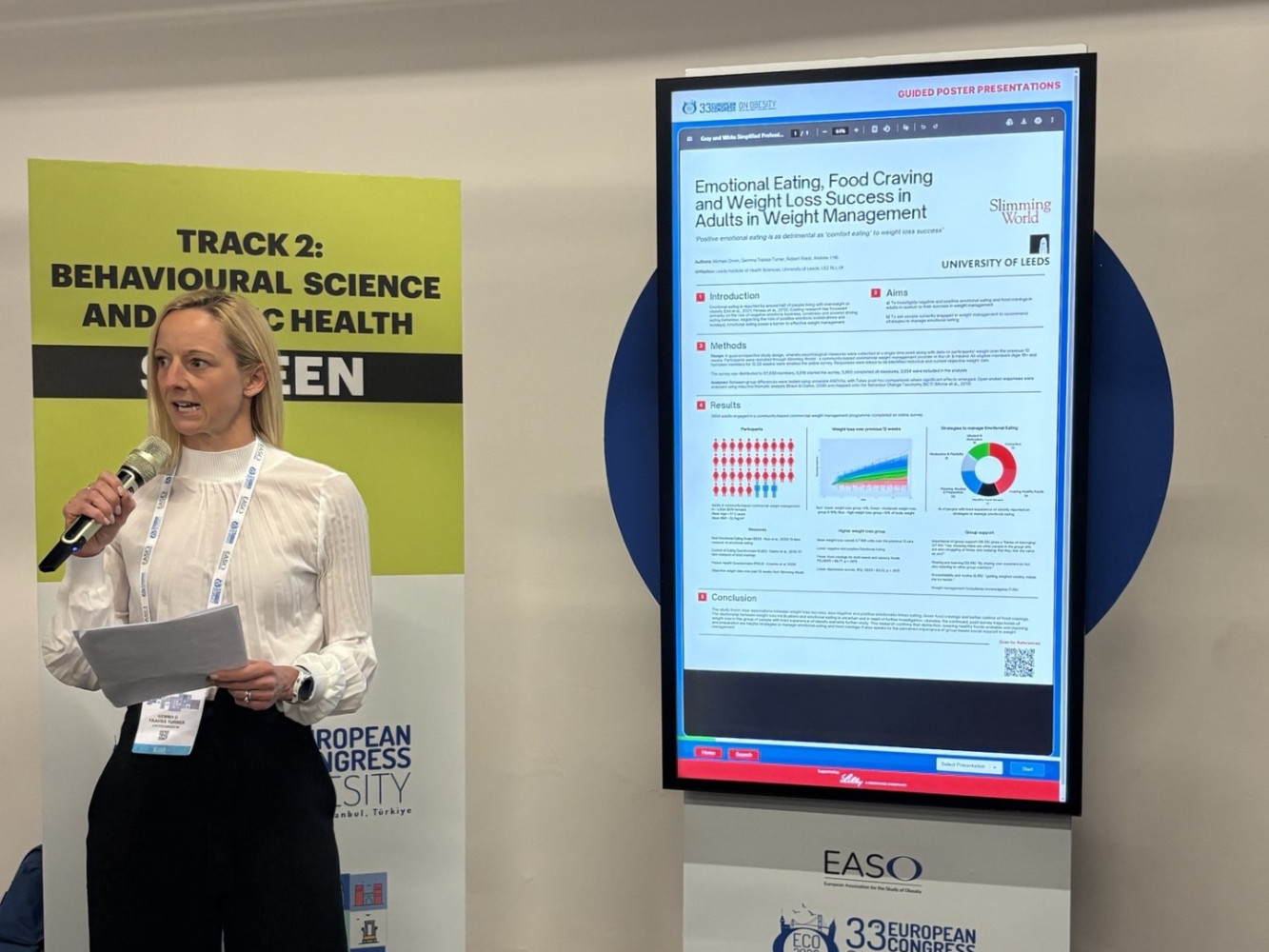
Happy eating can derail weight loss as well as comfort eating, study shows
Positive emotions such as excitement and celebration can trigger overeating as well as negative emotions like stress and sadness, according to new research being presented at this year’s European Congress on Obesity (ECO).
The study, conducted independently by the University of Leeds, is one of the largest real-world investigations into emotional eating and weight management to date. Although emotional eating is well recognised, most previous studies have focused only on negative emotions and little research has looked at eating in response to positive emotions. This is the first to explore both positive and negative emotional triggers alongside food cravings in adults actively trying to lose weight.
Drawing on data from 3,834 Slimming World members, researchers say the findings highlight the importance of understanding and addressing emotional eating within weight management. It demonstrates practical and psychological strategies and support, which Slimming World provides via its network of community groups and online service, are beneficial in helping people with high emotional eating drivers.
Participants were grouped based on total weight loss over their first 12 weeks: those losing less than five per cent of their start weight, those losing between five and 10 per cent and those losing more than 10 per cent. Members in each group had lost weight (-4.12kg, -10.43kg and -17.08kg respectively), with an average Body Mass Index (BMI) reduction of 3.7kg/m².
Researchers found those in the group who’d lost the most weight reported the lowest levels of both negative and positive emotional eating, as well as fewer food cravings, better craving control and better overall mental wellbeing.
This study reinforces what we’ve always known at Slimming World, that lasting weight loss happens when emotional wellbeing is supported just as much as food choices and activity levels.

Participants highlighted a range of behaviour change techniques, which are used within Slimming World’s support system, as helpful in managing their emotional eating. Members who lost more weight recommended using:
· distraction techniques, such as physical activity, hobbies or social interaction;
· keeping healthy foods available and healthy food swaps;
· planning and preparation including meal planning and shopping strategies;
· and mindset exercises, such as positive affirmations and keeping visual reminders of their achievements or goals.
Dr Gemma Traviss-Turner, who led this study, says: “This is one of the first large-scale studies to explore both positive and negative emotional eating. It highlights the importance of understanding and addressing emotional eating and treating it as a real issue in weight management. Many people have struggled with emotional eating for years or even decades and have experienced significant guilt and shame. Externally, this has been misconstrued as lack of discipline or greediness and people have suffered in silence. Our study provides a deeper insight into the emotional triggers to overeating and the findings will enable Slimming World to develop even more tools and resources to support their members.”
The study included objectively measured weight of Slimming World members, rather than self-reported weight, and demonstrated the value members found in the organisation’s in-person group support when it came to managing emotional eating. They cited a sense of belonging and learning from others.
Dr Jemma Donovan, Slimming World Research Manager, says: “This study reinforces what we’ve always known at Slimming World, that lasting weight loss happens when emotional wellbeing is supported just as much as food choices and activity levels. While helping people to eat more healthily and become more active is essential, it isn’t the whole story.
“People also need support to explore and strengthen their motivation and commitment, understand the obstacles that might stand in their way and develop strategies and resilience that help them lose weight and keep it off. That’s exactly what our weekly groups provide. We also have a range of tools that our Consultants support members to use and have added more since this research was conducted, including drawing on latest science such as urge surfing and habit stacking. Our approach is based on a blend of expertise, encouragement and unwavering support – and this study shows how vital that is for long-term success.”
Slimming World is also presenting research at ECO, which is being held in Istanbul from May 12th – 15th 2026, that shows behavioural support, such as that provided within its group, can encourage healthier eating, activity, drinking habits and weight loss in adults who have had weight loss surgery.